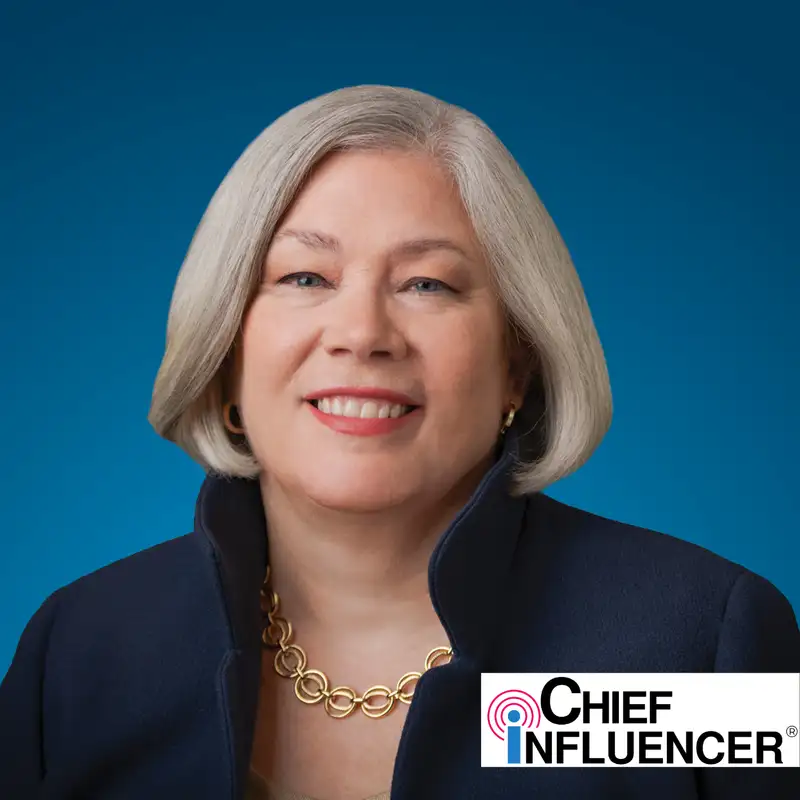
In this special live edition of the Chief Influencer podcast, recorded at The George Washington University’s College of Professional Studies, host Anthony Shop sits down with Dr. Ellen M. Granberg, the 19th president of GW and the first woman to lead the institution in its 200+ year history.
President Granberg shares her journey from accidental leader to national influencer in higher education, offering candid insights on authenticity, influence, student success, and leading through historic change. She reflects on GW’s ambitious new strategic framework, Raising Higher: GW’s Path to Preeminence, and why she believes Washington, D.C., will remain the epicenter of influence for generations of students.
This episode explores leadership rooted in purpose, community, and adaptability, hallmarks of a true Chief Influencer.
Takeaways:
- Lead Through Influence, Not Authority: President Granberg emphasizes that formal power rarely drives progress; informal networks, trust, and relationships do. Leaders should invest time in understanding how influence actually flows inside their organizations and use that knowledge to move initiatives forward.
- Build Strategies With Your Community, Not For Them: The boldest parts of GW’s strategic framework originated from community feedback. Co-creation strengthens ownership, alignment, and ambition. Leaders should treat listening sessions not as a formality but as a genuine source of direction.
- Stay Flexible: Use a Compass, Not a Checklist: In an unpredictable world, rigid multi-year plans quickly become obsolete. Granberg’s “strategic framework” approach shows that leaders should focus on direction and values, while leaving space for innovation, adaptability, and real-world changes.
- Elevate Stories to Build Connection and Belonging: President Granberg repeatedly returns to the power of storytelling, highlighting research impact, student experiences, and interdisciplinary collaboration. Leaders can strengthen internal culture and external reputation by telling stories that make values tangible.
- Cultivate Resilience Through Real-World Experiences: Creating opportunities for students to experiment, fail, adapt, and lead—such as internships, student government roles, and placements in humanitarian organizations—builds durable leadership skills. Any organization can apply this by giving people stretch roles and meaningful responsibilities, while providing the support they need to thrive.
- Use Social Media Strategically Through Trusted Messengers: Posting alone isn’t enough. Granberg learned to partner with the Student Government Association to reach students effectively. Leaders should map who their audiences trust and work through those individuals or channels to amplify key messages.
- Model Authenticity and Show When Your Mind Has Changed: President Granberg views authenticity as essential to trust, and she openly shares moments when community input changed her perspective. Leaders can strengthen credibility by showing vulnerability, admitting evolution in their thinking, and being consistent in how they show up.
Quote of the Show:
- “When I was younger, I used to believe that if you were going to lead, you had to change your personality. What I have learned over time is that to lead authentically is one of the most powerful ways to build trust because you show up on a consistent basis, and you start to build confidence among the folks you’re working with, among the community that you’re leading. And that has just been a wonderful lesson for me. It’s not about becoming someone different from who I am; it’s about becoming more of exactly who I am and then folding that into the way that I lead.”
Links:
- LinkedIn: https://www.linkedin.com/in/ellen-granberg-0b6b607/
- Website: https://www.gwu.edu/